
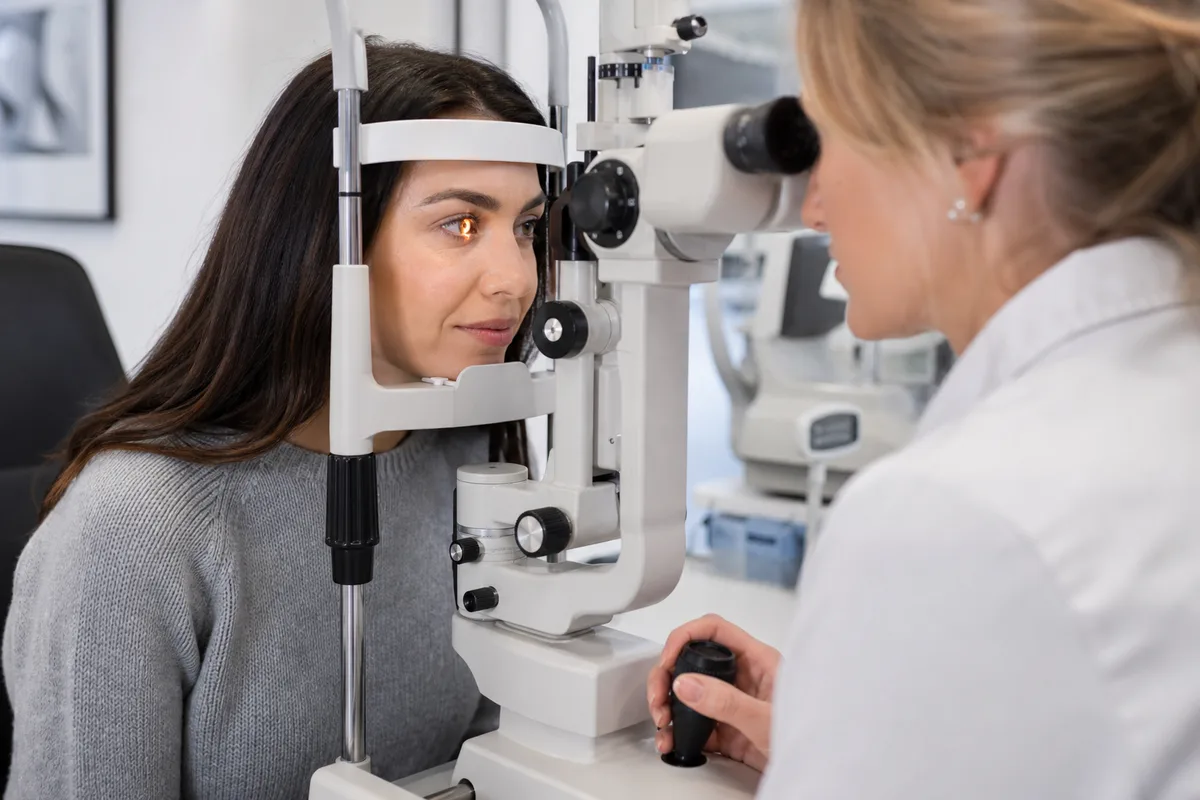
Why Regular Eye Exams Matter
Your eyes change more than you might realize, often without any obvious warning signs. A comprehensive eye exam does more than check whether you need glasses — it's a full look at the health of your eyes, inside and out. Many common eye conditions, including glaucoma and diabetic eye disease, develop gradually and painlessly, which is why routine exams are one of the most effective ways to protect your vision over a lifetime.
What Is a Comprehensive Eye Exam?
A comprehensive eye exam is a series of tests performed by an eye care professional to evaluate your vision and check for eye diseases. It goes beyond a simple vision screening by combining refraction testing with a detailed evaluation of eye health, both inside and outside the eye.
What a Comprehensive Exam Typically Includes
- Patient and Family History: A review of your vision concerns, general health, medications, and any family history of eye disease.
- Visual Acuity Testing: Reading letters on a chart to measure how clearly you see at various distances.
- Refraction Assessment: Determining your exact eyeglass or contact lens prescription, if one is needed.
- Eye Health Evaluation: Examining the front and back of the eye, including the retina and optic nerve, to check for signs of disease.
- Eye Pressure Check: A quick, painless measurement that helps screen for glaucoma.
- Discussion of Findings: A conversation about your results and any recommended next steps.
Eye Exams for Adults
As we age, our eyes are more susceptible to conditions like cataracts, glaucoma, macular degeneration, and changes in near vision. Regular exams allow your provider to track these changes over time and catch problems early, when treatment tends to be simpler and more effective. For adults managing conditions such as diabetes or high blood pressure, eye exams also give your provider a window into how those conditions may be affecting your eye health.
Eye Exams for Children
Children's eyes are still developing, which makes early and regular exams especially important. Undetected vision problems can affect a child's learning, coordination, and confidence, and many young children won't realize — or won't be able to explain — that something looks blurry or off. A pediatric eye exam checks for common childhood issues like nearsightedness, farsightedness, astigmatism, lazy eye (amblyopia), and eye alignment problems (strabismus), so that any needed correction or treatment can start as early as possible.
How Often Should You Have an Eye Exam?
How frequently you should be seen depends on your age, health history, and any existing eye conditions. In general:
- Children: Regular exams starting in early childhood, with follow-ups as recommended by your provider.
- Adults: A comprehensive exam every one to two years, or as recommended based on your eye health.
- Those with risk factors: Individuals with diabetes, a family history of eye disease, or existing vision problems may need more frequent visits.
Your provider will let you know the right schedule for your specific needs.
What to Expect During Your Visit
Before your exam, we'll ask about your vision history, any symptoms you've noticed, your general health, and the medications you take. The exam itself is generally painless and involves a series of straightforward tests — reading an eye chart, looking through a refraction device to fine-tune your prescription, and having the health of your eyes examined with specialized instruments. Depending on your visit, your provider may also use eye drops to dilate your pupils for a more thorough look at the retina and optic nerve; if this is done, your vision may be blurry and light-sensitive for a few hours afterward, so it's worth planning accordingly.
A Few Tips to Prepare
- Bring your current glasses or contact lenses, along with your prescription if you have it.
- Make a note of any vision changes, headaches, or eye discomfort you've experienced.
- Bring a list of medications and any relevant medical history.
- If you think your pupils may be dilated, consider arranging a ride or bringing sunglasses for the trip home.
Signs You Shouldn't Wait for Your Next Scheduled Exam
While routine exams are important even when your vision feels fine, certain symptoms warrant a sooner visit, including:
- Sudden blurry or double vision
- Eye pain or redness that doesn't resolve
- Flashes of light, new floaters, or a shadow in your field of vision
- Difficulty seeing at night or in low light
- Frequent headaches associated with reading or screen use
Comprehensive Care, All in One Place
At Ace Medical Care, our optometry and ophthalmology providers work together so that whatever your exam reveals, you have a clear path forward — whether that's an updated glasses prescription from our on-site optical shop, a referral for specialized evaluation, or ongoing monitoring of an existing condition.
Ready to Book Your Appointment?
Contact us to schedule your comprehensive eye exam and take an important step toward protecting your vision.