
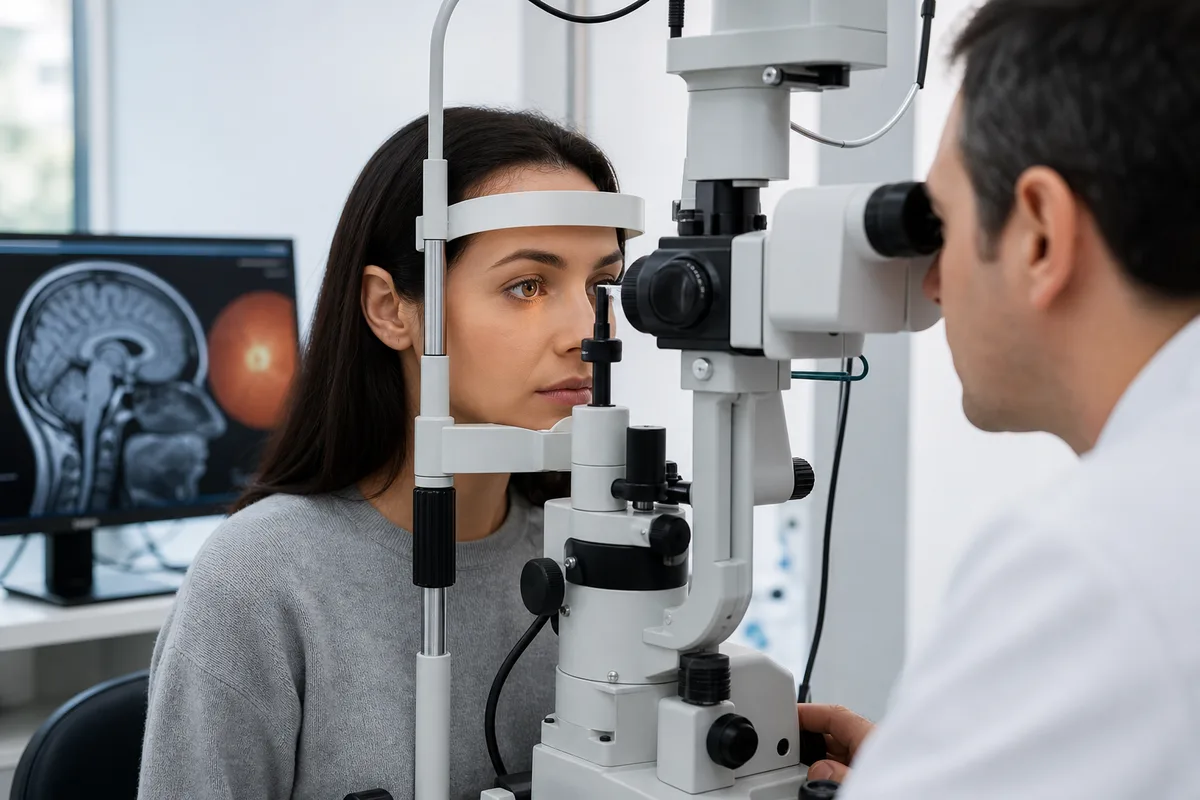
Introduction: Where Vision and the Nervous System Meet
Vision doesn't happen in the eyes alone — it depends on a complex pathway connecting the eyes to the brain. When something along that pathway is affected, it can cause vision changes that don't fit a typical eye-health explanation. At Ace Medical Care, our neuro-ophthalmology evaluations are designed to investigate exactly these kinds of cases.
What Is Neuro-Ophthalmology?
Neuro-ophthalmology is a specialized field that sits at the intersection of ophthalmology and neurology. It focuses on vision problems that stem from the optic nerve, the visual pathways in the brain, or the nerves and muscles that control eye movement — rather than from the structures of the eye itself, such as the cornea, lens, or retina.
Conditions a Neuro-Ophthalmology Evaluation May Address
- Optic Nerve Disorders: Conditions affecting the nerve that carries visual signals from the eye to the brain.
- Double Vision: Vision problems related to misalignment or dysfunction of the muscles controlling eye movement.
- Unexplained Vision Loss: Vision changes that aren't accounted for by a problem visible on a standard eye exam.
- Pupil Abnormalities: Irregularities in pupil size, shape, or response to light.
- Visual Field Changes: Loss of peripheral or specific areas of vision that may relate to the brain's visual pathways.
When a Neuro-Ophthalmology Evaluation Is Recommended
A neuro-ophthalmology evaluation is often recommended when a patient experiences vision symptoms that don't have a clear cause after a standard eye exam, or when vision changes occur alongside neurological symptoms such as headaches, double vision, or changes in eye movement. These evaluations can also be part of the workup for certain broader neurological or systemic conditions that have visual symptoms.
What to Expect at Your Evaluation
A neuro-ophthalmology evaluation typically includes a detailed history of your symptoms, a comprehensive assessment of vision and visual fields, and an examination of the optic nerve and pupil responses. Eye movement and alignment are also assessed closely, since subtle changes here can offer important clues. Depending on what's found, additional imaging or coordination with other specialists may be recommended.
Why This Kind of Evaluation Matters
Because the visual system is so closely tied to the brain and nervous system, vision changes can sometimes be an early sign of a broader neurological issue. A careful, specialized evaluation helps determine whether a vision problem originates in the eye or further along the visual pathway, guiding the right next steps for your care — whether that means treatment, monitoring, or referral to another specialist.
Who Should Consider a Neuro-Ophthalmology Evaluation?
- Patients experiencing double vision or unusual eye movement
- Anyone with vision loss or visual field changes not explained by a standard eye exam
- Patients with pupil irregularities noticed by themselves or another provider
- Individuals referred by a neurologist, primary care provider, or another eye care provider for further evaluation
Ready to Book Your Appointment?
If you're experiencing vision changes that haven't been fully explained, our team at Ace Medical Care is here to help. Contact us to schedule a neuro-ophthalmology evaluation.