
What Is Corneal Topography?
Corneal topography is a non-invasive imaging test that creates a detailed, color-coded map of the surface curvature of your cornea — the clear, dome-shaped front surface of the eye. Because the cornea plays a major role in focusing light onto the retina, even small irregularities in its shape can affect vision, and topography lets our providers see that shape in far more detail than a standard exam allows.
How It Works
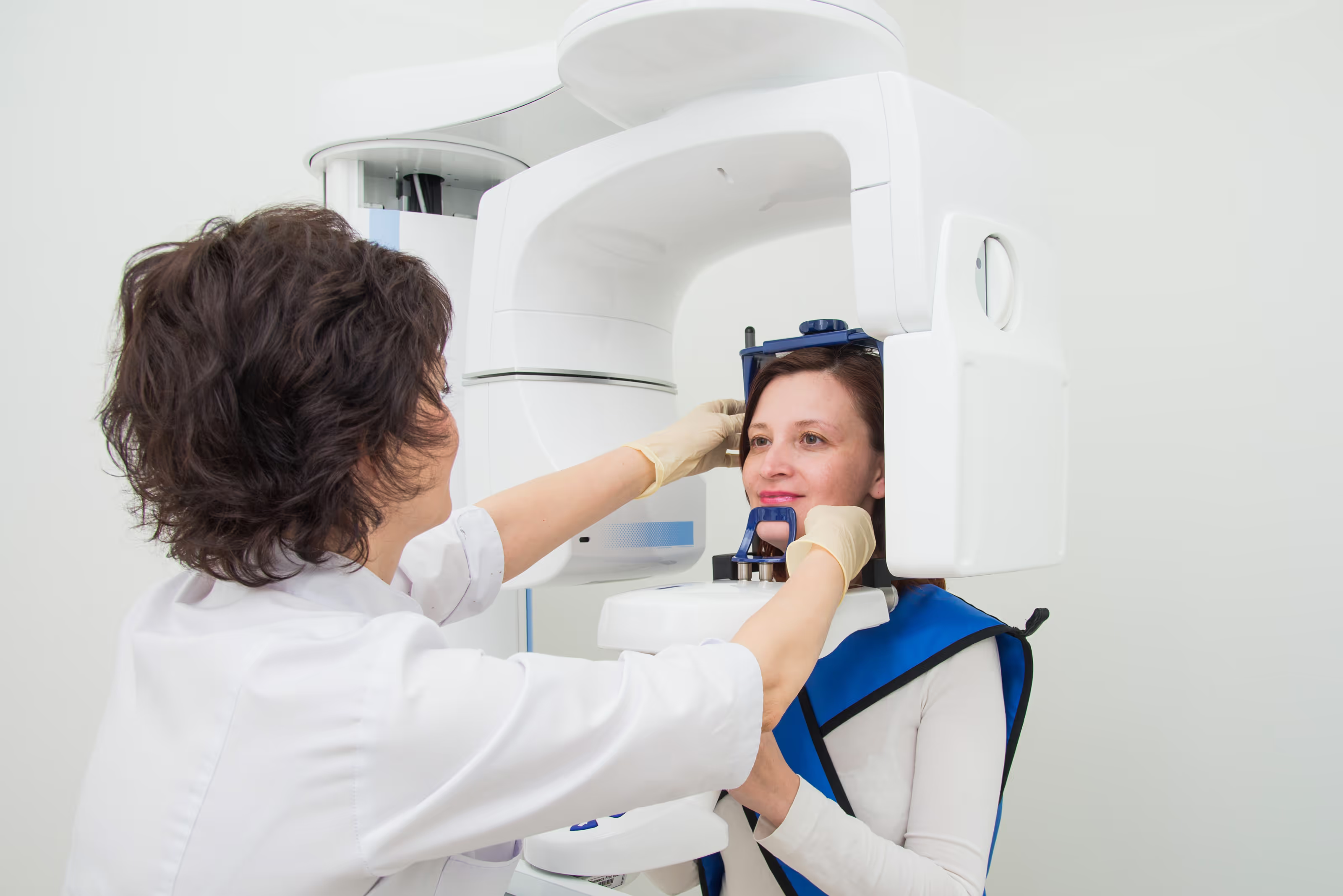
During the scan, you'll rest your chin and forehead against a support while a topographer projects a pattern of light rings onto your cornea and analyzes their reflection. The device builds a detailed map showing the curvature across the entire corneal surface, highlighting areas that are steeper or flatter than normal. The test is quick, painless, and involves no contact with the eye.
Why We Use Corneal Topography
This mapping is especially useful for fitting contact lenses, since an accurate picture of corneal shape helps us select a lens that fits comfortably and correctly. It's also an important tool for detecting and monitoring keratoconus and other conditions that cause progressive thinning or irregular steepening of the cornea, for evaluating astigmatism, and for planning certain vision correction procedures. Tracking topography over time can help identify subtle changes in corneal shape before they significantly affect vision.
What to Expect
No special preparation is needed for corneal topography, and there's no discomfort involved. The scan typically takes just a few seconds per eye, and results are available immediately for your provider to review with you as part of your exam or contact lens fitting.